The Dynamo Lesson: Why AI and Automation Haven't Made Construction More Productive Yet
Most firms now use AI, yet 89% of executives see no productivity gain. The electric motor's history shows why, and what construction has to redesign to get the payoff.
Nearly 6,000 senior executives in the US, UK, Germany and Australia were asked over the winter of 2025-26 whether AI had changed their company's productivity. 89% said no.1, 3
The survey, published by the National Bureau of Economic Research and run by economists including Stanford's Nicholas Bloom, with the Federal Reserve Bank of Atlanta, the Bank of England, the Bundesbank and Macquarie University, found AI almost everywhere. 69% of firms use it, and most executives use it themselves every week. Yet nine in ten saw no effect on productivity or jobs over the past three years.1, 2
That doesn't mean the technology doesn't work. It is a pattern economists have seen before, most famously with the electric motor. And it helps explain why construction, despite 3D printers, robots and a wave of AI tools, still builds much the way it did decades ago.
The dynamo lesson: new power, old factory

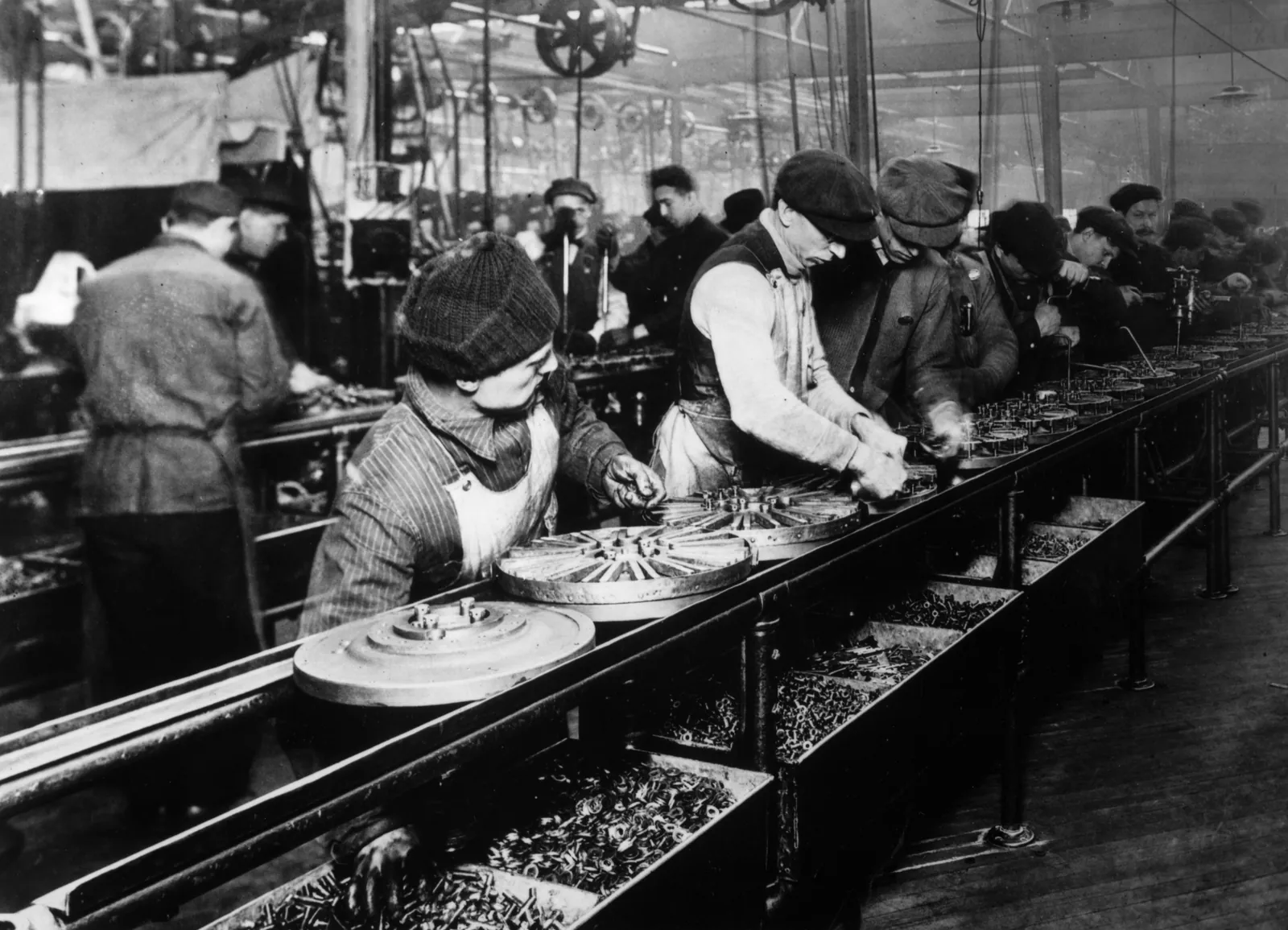
Economists call this the productivity paradox. In 1987, Nobel laureate Robert Solow quipped that "you can see the computer age everywhere but in the productivity statistics." The history of electricity shows why this happens, and how it eventually changes.
The first central power stations opened in the early 1880s. Yet in 1899, electric motors supplied less than 5% of the mechanical power in American manufacturing, and the productivity payoff didn't arrive until the 1920s, about 40 years later.4
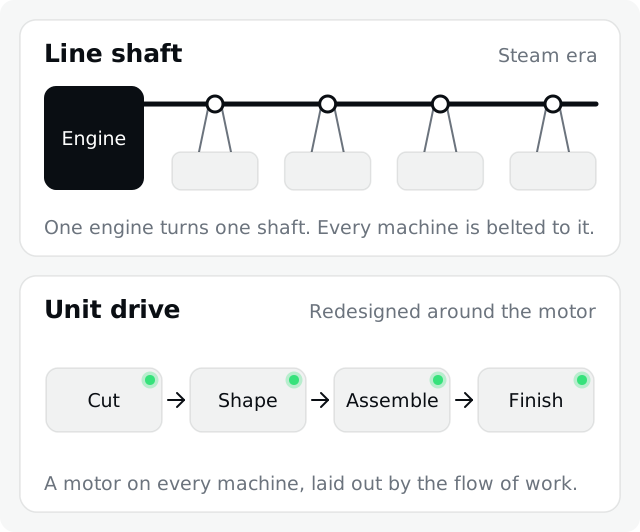
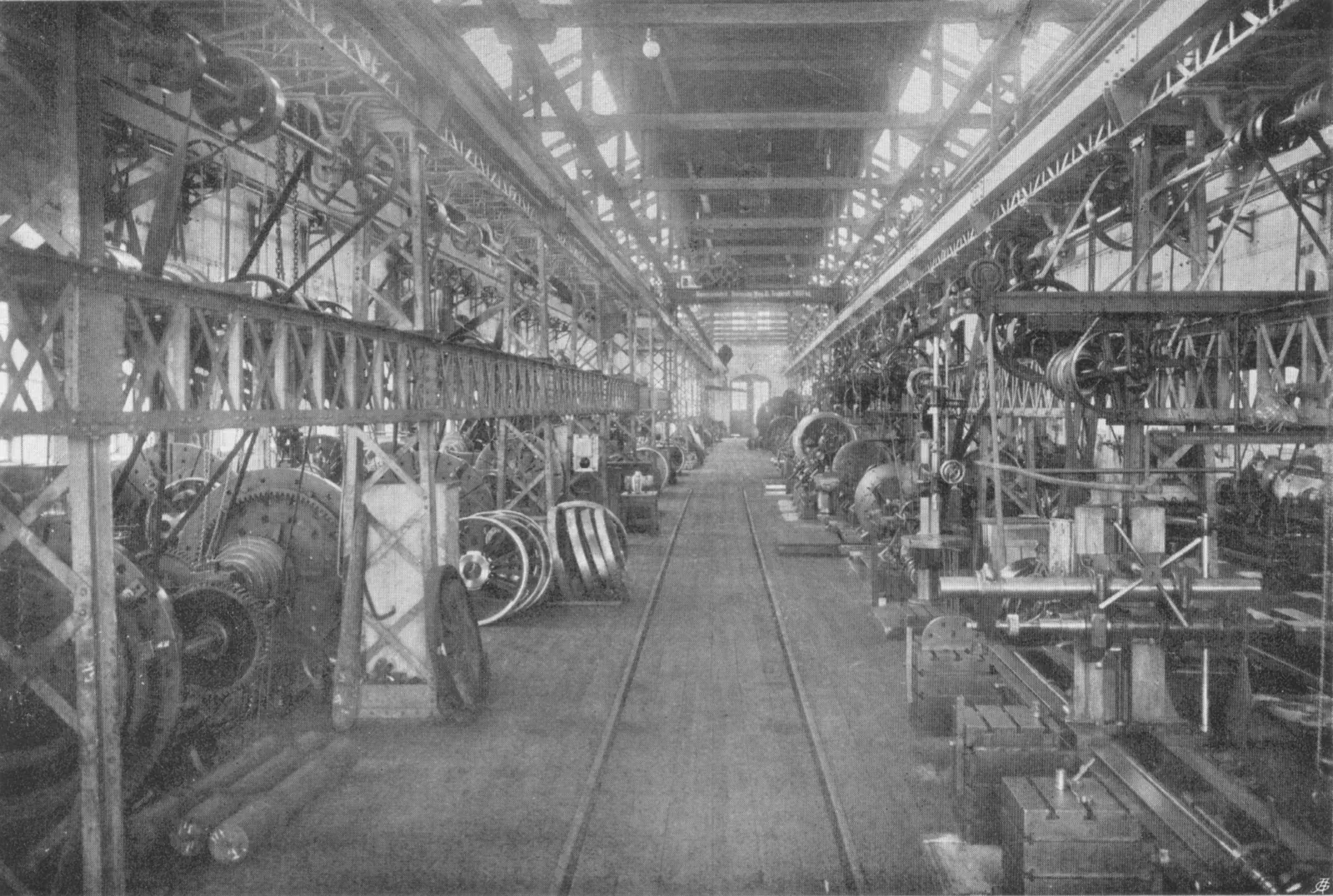
Economic historian Paul David explained why in his 1990 paper The Dynamo and the Computer. Factories of the steam era were built around one engine turning a long line shaft, with belts running to every machine. Machines were packed close to the shaft, often over several floors, to limit power losses.4, 5
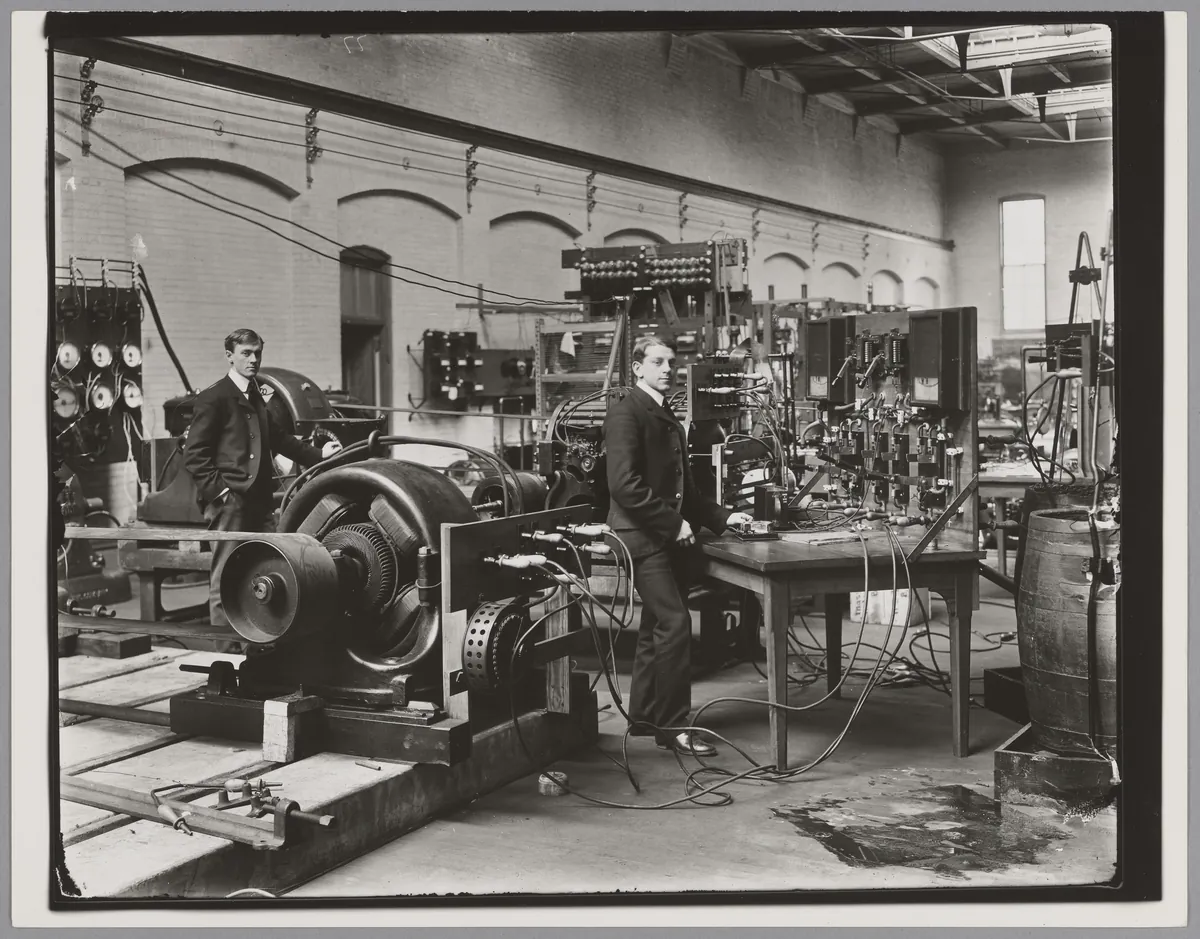
When owners electrified, most simply swapped the steam engine for a big electric motor. The shaft, the belts and the layout stayed the same. So did productivity.4, 5
The gains came only when factories were redesigned around what the motor made possible:
- A small motor on every machine ("unit drive") instead of one engine for the whole plant
- Single-storey buildings, no longer stacked around a shaft
- Machines arranged by the flow of work, not by distance from the power source
"You rip out the steam engine and put in an electric motor in its place. Nothing changes."
Economist Tim Harford on that first attempt, in an interview with Behavioral Scientist5
The technology was never the bottleneck. The process built around the old technology was.
Construction is bolting AI and automation onto the old process
Construction is living through the first half of the dynamo story. Automation tools are arriving, but almost all of them are being added to the existing way of working.
The RICS 2026 survey found about two-thirds of construction professionals now use AI in some form, yet fewer than 1% have integrated it across their organization.6 Robots are on the same path: BuiltWorlds found more than two-thirds of firms using construction robotics were still in pilots or testing.7
Look at where the new technology usually lands:
- 3D printers and other robotic machines doing pilot projects for the 12th time.
- A chatbot inside the project management software that drafts RFIs, emails and daily reports.
- An app that reads drawings faster, then hands numbers to a separate estimate.
- Half a dozen electro-mechanical systems dropped onto a site that still runs on phone calls and a schedule written for human crews.
Each one is a faster motor on the same line shaft.
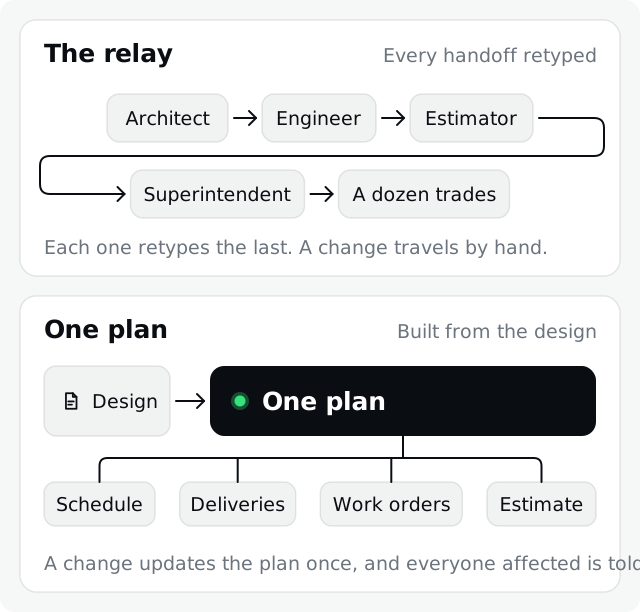
Underneath, the relay stays the same: architect to engineer to estimator to superintendent to a dozen trades, with every handoff retyped and every change carried by hand.
A robot waits on that relay like everyone else. So it sits idle between tasks, and its payoff is judged one project at a time.
As Vincent Payen, ServiceTitan's senior vice president of product, said of the trades, "AI adoption in the trades started with point solutions - a specific fix for a specific problem."8
The outcome matches the executive survey. Research from MIT and Suffolk found an American construction worker in 2020 produced less value than one in 1970.13
Faster paperwork and smarter machines inside the same process won't change that.
We have seen this before: 3D printing, and now "agentic" AI
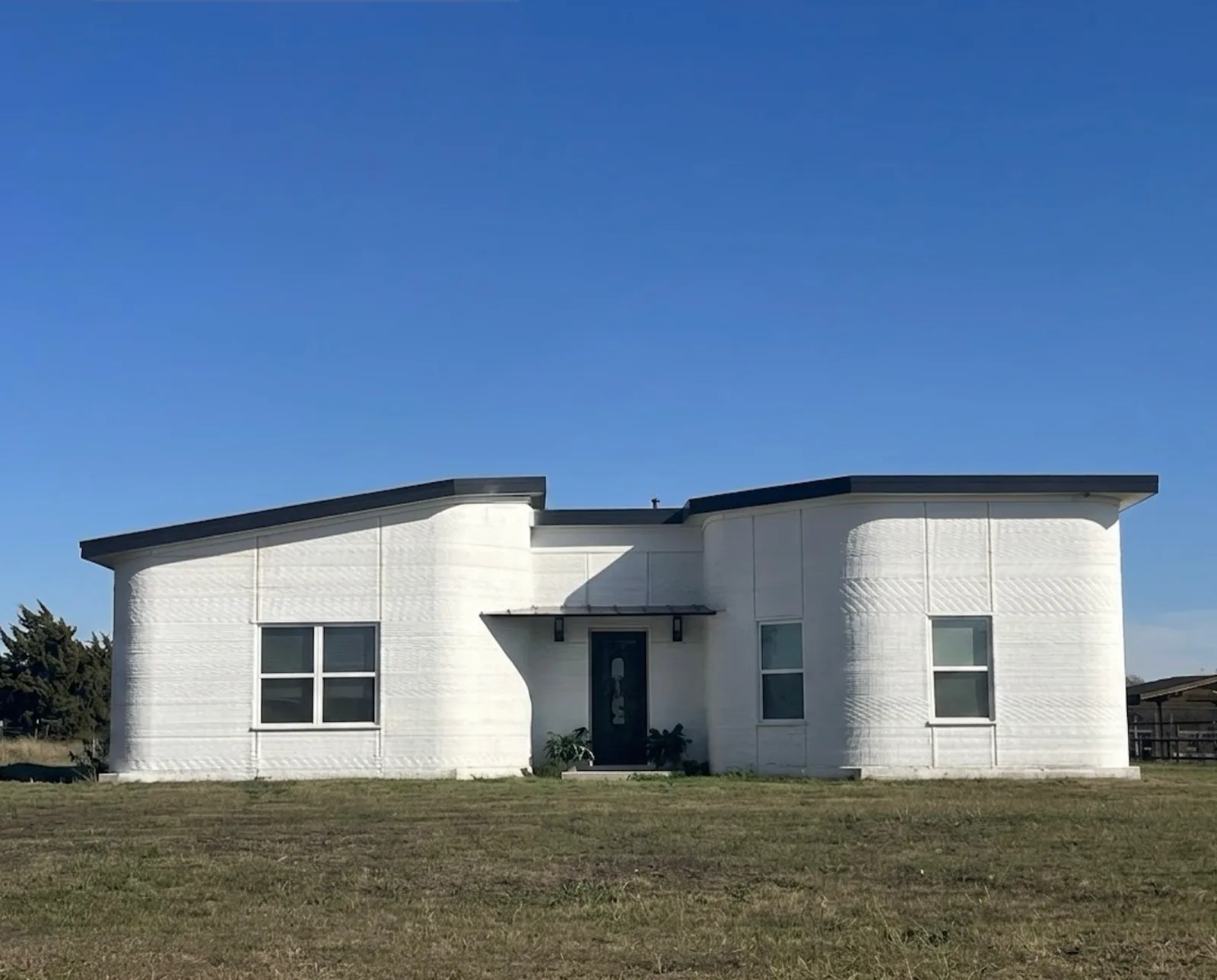
3D concrete printing was supposed to revolutionize homebuilding. A printer could raise a home's walls in days with a small crew, and ICON, one of the best-known companies in the field, was valued at about $2 billion in 2022.10
But the printer replaced one step: the walls.
Plumbing, electrical, roofing, windows, finishes, permits and the schedule tying them together stayed as before, run through the same handoffs.
The results have been sobering:
- A 1,000 sq ft 3D printed home in Yuba County, California, was priced at $375,000 in 2026, about $375 per sq ft against a county median of $268 per sq ft.9
- ICON cut about a quarter of its staff in early 2025. Mighty Buildings put itself up for sale, and robotic homebuilder Diamond Age entered liquidation.10, 11
This is the steam engine swapped for a motor.
The machine worked. The process around it didn't change, so neither did the cost.
The same pattern is now playing out in software.
Construction companies want agentic workflows: AI that does the work, not just answers questions about it. Many software vendors have responded by adding a chatbot to their existing product and calling it AI integration, a practice critics call AI washing.15
A chatbot that can tell you a delivery is late still leaves a person to move the schedule, call the subs and re-order the materials.
As one 2026 contech outlook put it, the AI tools displacing the old systems are the ones that "do meaningful work, not just assist."12
What it means to build the process around automation and AI
The factory owners who won didn't ask how to power the old layout. They asked what layout the new power made possible.
Construction needs to ask the same question:
If software can read a design, engineer it and keep a plan current, and machines can take on more of the physical work, what should the process look like?

| Bolted on (the line shaft) | Built around automation and AI (unit drive) | |
|---|---|---|
| Starting point | AI reads documents people already made. | The system works directly from the design. |
| Plans | Separate schedule, estimate and orders, each updated by hand. | One plan that every output comes from. |
| Changes | A person carries each change to every tool and trade. | The plan updates and tells everyone affected. |
| Machines | A robot fits into a schedule built for crews and waits on handoffs. | Machines are scheduled in the same plan as crews, fed dimensions straight from the design. |
| People's role | Do the coordination, with AI help on paperwork. | Set the limits and make the calls; the system coordinates. |
| Scope | One project at a time. | Every home on one plan, with crews and machines flowing between them. |
This is a bigger change than adding a tool or buying a robot.
It is also where the productivity is.
How Bulrix builds homes around automation and AI
Bulrix was designed as the redesigned factory, not the faster motor.
Instead of adding a chatbot or a machine to each step of the old relay, it removes the relay and runs the build from one plan. The system delivers construction engineering and management with human stakeholders in the loop.
- The design drives everything. Upload the architect's design and Bulrix engineers the house: wall construction, electrical, plumbing, heating and cooling, code checks and a full material take-off. Nothing is retyped.
- One plan replaces the handoffs. The schedule, dated deliveries, sub work orders, estimate and change orders all come from the same plan, so there is no second copy to drift out of date.
- The plan keeps itself current. Rain, a late delivery or a failed inspection replans the work it touches, and everyone affected is told. The team sets the limits and makes the calls that matter.
- Crews and machines share one plan. Builders start with today's crews and subs. As each trade automates, its machine joins the same plan, fed dimensions straight from the design, and the share of work done by machine is measured home by home.
- Every home, not one at a time. A crew or machine moves to the next lot the moment its work is ready, and the system learns the company's real pace with every home built.
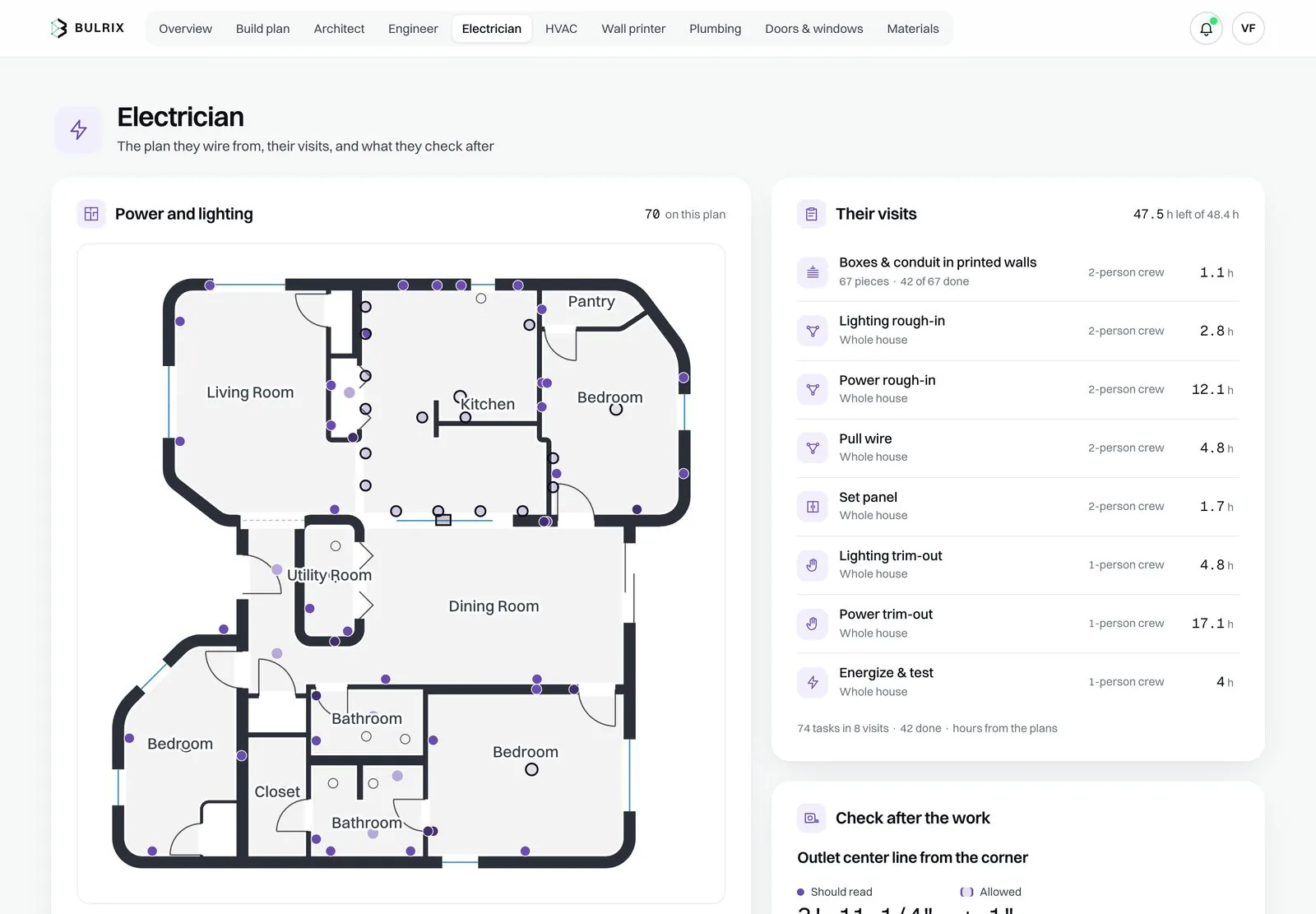
Project management comes as a by-product of the engineering, so the separate project management software can come off the books.
Don't wait 40 years for the payoff
The electric motor's gains went to the factories that redesigned first.
Construction's gains from automation and AI will go to the builders who change the process, not just the tools.
See what that looks like on a real home: one upload of a 1,674 sq ft design produced 137 sequenced pieces of work, 19 dated deliveries, 88 sub work orders and a full estimate.14
Request a demo to walk through the full simulation at demo.bulrix.app.
FAQ
What is the productivity paradox?
It is the gap between widespread adoption of a new technology and the absence of productivity gains in the data. Economist Paul David showed that electricity followed this pattern for about 40 years, until factories were redesigned around the electric motor.
Why hasn't AI improved construction productivity yet?
Most AI in construction is added to the existing process: it drafts documents or speeds up one task, while the handoffs between companies stay the same. The NBER survey found 89% of executives across industries saw no productivity impact from AI over three years.
What is holding back automation in construction?
Construction robots are usually dropped into a schedule built for human crews, so they wait on the same handoffs and are judged one project at a time. Most firms using construction robotics are still in pilots. Machines pay off when they are planned alongside crews from the design.
Why haven't 3D printed homes lowered construction costs?
A printer builds the walls, but plumbing, electrical, roofing, finishes and scheduling still run the conventional way. In 2026 a printed home in Yuba County, California, was priced at about $375 per sq ft against a county median of $268 per sq ft. The machine changed one step, not the process.
How can builders get real productivity from automation and AI?
Redesign the process around them: work from the design, run every home on one plan, let the system coordinate and keep people on the decisions.
That is how Bulrix runs a build.
Sources
- Yotzov, Barrero, Bloom et al., Firm Data on AI, NBER Working Paper 34836, February 2026nber.org
- NBER Digest, Global Evidence on Business Use of AI, May 2026nber.org
- Dan Robinson, 6,000 execs struggle to find the AI productivity boom, The Register, February 18, 2026theregister.com
- Paul A. David, The Dynamo and the Computer: An Historical Perspective on the Modern Productivity Paradox, American Economic Review 80(2), May 1990, pp. 355-361ideas.repec.org
- Tim Harford, interviewed by Dave Nussbaum, Fifty Ways to Leave Your Economy Fundamentally Transformed, Behavioral Scientist, October 6, 2017behavioralscientist.org
- RICS, AI in Commercial Property and Construction Report 2026, August 18, 2026rics.org
- Audrey Lynch, Construction's Roadblocks to Robotics, BuiltWorlds, July 16, 2024builtworlds.com
- Mark Brohan, Contractors Ramp Up AI Use, but Profit Gains Lag, Distribution Strategy, September 30, 2026distributionstrategy.com
- Joe Wilkins, The Economics of 3D Printed Homes Are Surprisingly Horrible, Futurism, February 22, 2026futurism.com
- Mary Ann Azevedo, ICON, a builder of 3D-printed homes last valued around $2 billion, cuts about 25% of staff, TechCrunch, January 9, 2025techcrunch.com
- Michael Molitch-Hou, ICON Secures $56M Amid Construction 3D Printing Sector's Growing Pains, 3DPrint.com, February 17, 20253dprint.com
- Last Week in ConTech, ConTech Predictions for 2026, February 5, 2026contechroundup.substack.com
- MIT Center for Real Estate, MIT Media Lab and Suffolk, Construction in the Age of AI (PDF), September 2026suffolk.com
- Bulrix, the demonstration house (access on request)demo.bulrix.app
- U.S. Securities and Exchange Commission, SEC Charges Two Investment Advisers with Making False and Misleading Statements About Their Use of Artificial Intelligence ("AI washing"), March 18, 2024sec.gov